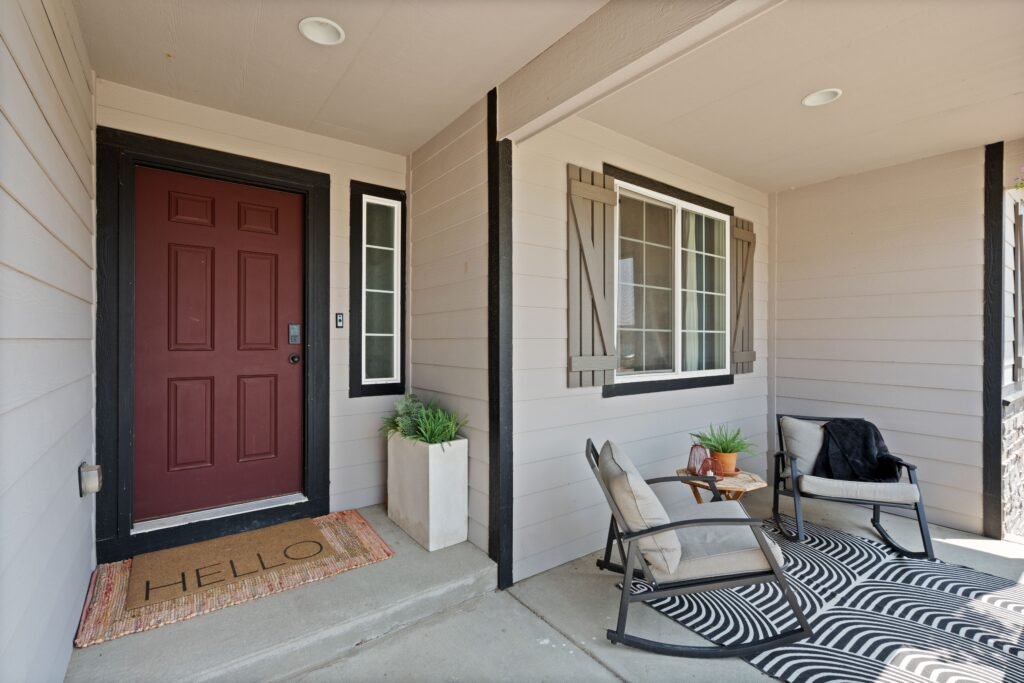
This is an example project plan, not a claim about a real home. Imagine a small, tired porch: peeling paint on the steps, a single worn chair, an empty corner, and a light that makes the space feel flat after dark. With a clear plan and a budget of under $100, that same porch can become a welcoming place to sit, greet neighbours, and enjoy a morning coffee. The key is to spend on changes people notice, reuse what you already have, and keep the work simple.
The Before: What to Look At First
Start by standing on the street and looking at your porch the way a visitor would. Note the condition of the floor, steps, and railings. Is paint peeling? Are boards loose? Is there clutter that could be stored elsewhere? Take a photo so you can compare the before and after honestly later.
Next, think about how you want to use the porch. Do you want a seat for one, a place for two, or mainly a tidy entrance? Your answer will shape the plan. A porch that needs to welcome guests needs a clear path and a place to pause. A porch for quiet mornings needs a comfortable seat and a little shade or shelter from wind.
Check safety first. Tighten loose boards, clear slippery leaves, and make sure steps and handrails are sound. If a repair is beyond basic DIY, leave it for a professional and use the budget for cosmetic improvements instead.
A General Budget Breakdown
Budgets vary by location and what you already own, so think in shares rather than a fixed shopping list. As a guide, allow the largest share for paint or a protective finish, because it changes the whole look. Allow a smaller share for seating cushions or a second-hand chair, another share for plants and pots, and a final share for lighting and small details such as a doormat.
Keep a small reserve for brushes, sandpaper, and cleaning supplies. These small items are easy to forget and can quickly eat into a budget. Shopping second-hand, borrowing tools, and reusing pots or furniture you already own are the easiest ways to stay under $100 without cutting corners on the finish.
Step 1: Clean and Paint
Cleaning comes before painting. Sweep the porch, wash surfaces, and let them dry. Lightly sand peeling paint and wipe away dust. A clean surface helps new paint stick and look even.
Choose one main colour and one accent colour, and keep the palette simple. A fresh colour on the front door, steps, or railing can transform the porch without painting every surface. Use paint suitable for outdoor use, follow the instructions on the tin, and allow proper drying time between coats. If you are unsure about a colour, test a small area first and look at it in daylight and in the evening.
Step 2: Add Simple, Comfortable Seating
Seating makes a porch feel like a room. You do not need a full furniture set. One sturdy chair with a weather-resistant cushion, a small stool for a drink, or a simple bench can be enough. Check second-hand shops, community groups, and items you already own before buying new.
Place seating where it catches the best view and the most comfortable light, and leave a clear path to the door. A small outdoor rug can help define the seating area, but only if it stays flat and does not create a trip hazard. Keep the arrangement simple so the porch still feels open.
Step 3: Bring in Plants
Plants soften hard edges and add life. Use a mix of heights: a taller plant in a corner, medium plants beside the door, and a small trailing plant on a step or railing if it is safe to do so. Choose plants suited to your light conditions and how often you can water them.
Reuse pots where possible, and group them in odd numbers for a natural look. Water plants well after planting, and check them regularly in hot weather. A few healthy plants look better than many struggling ones, so start small and add more over time.
Step 4: Finish With Lighting and Details
Lighting is the final touch that makes a porch feel finished after dark. Solar lights, a battery lantern, or a warm-toned porch bulb can create a welcoming glow without wiring work. Place light where it helps people see steps and the door, not just where it looks decorative.
Add one or two details, such as a doormat, a house number that is easy to read, or a small wall hook for a watering can. Avoid clutter. The goal is a porch that looks cared for, not crowded.
The After: A Porch That Works
In this example plan, the after is not about luxury. It is about a clean, freshly painted surface, a comfortable place to sit, healthy plants by the door, and soft light in the evening. The porch still has the same size and structure, but it feels intentional. That is the real test of a budget makeover: the space works better, even if most of the change came from cleaning, paint, and thoughtful placement.
Conclusion
A budget porch makeover under $100 is possible when you plan first, spend on visible changes, reuse what you have, and keep the design simple. Clean, paint, seat, plant, and light, in that order, and you will have a porch that welcomes you home every day.