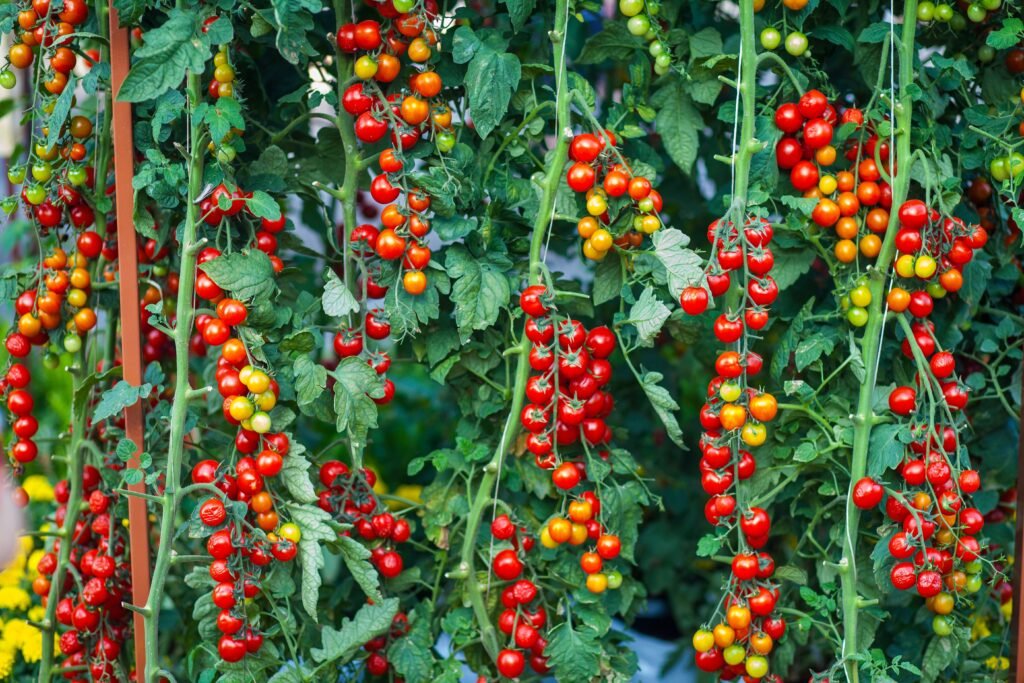
There is something satisfying about stepping outside, picking a few tomatoes, and snipping fresh basil for dinner. You do not need a large garden or years of experience to enjoy that. With a sunny spot, good soil, and a simple watering routine, tomatoes and herbs are a friendly place to start growing food at home.
Choosing Varieties for Beginners
Start small and choose varieties that suit your space. Cherry tomatoes are often a good first choice because they tend to be productive, ripen in stages, and grow well in pots. Larger slicing tomatoes can also work, but they usually need stronger support and more room. If you are unsure, ask at a local garden centre which types do well in your area and climate.
For herbs, begin with a few you actually cook with. Basil, mint, parsley, and chives are popular for good reason: they are useful, they grow quickly, and they forgive small mistakes. Keep mint in its own pot, because it spreads vigorously and can take over a shared bed. Rosemary and thyme are also useful, but they prefer drier soil, so they are best grouped with plants that like similar conditions.
It is tempting to plant everything at once. Resist that urge for your first season. Three or four plants, grown well, will teach you more and give you more to enjoy than a crowded bed that is hard to water and harvest.
Containers Versus Beds
Both containers and garden beds can work well. Containers are ideal for balconies, patios, and small yards. They warm up quickly, they are easy to move, and they let you control the soil. Choose pots with drainage holes, and use a pot large enough for a tomato plant to grow roots and stay upright. A small pot will dry out quickly and may topple when the plant gets tall.
Raised beds and in-ground beds give plants more room for roots and usually hold moisture longer. They are a good choice if you have garden space and plan to grow several plants. Whichever you choose, make sure the spot gets plenty of sun. Most tomatoes and many herbs do best with at least six hours of direct sunlight a day. A spot that is sunny in the morning but shaded all afternoon may still work for leafy herbs, but it is less ideal for tomatoes.
Soil and Sun
Good soil is the foundation of a healthy plant. Use a loose, well-draining potting mix for containers, and enrich garden beds with compost before planting. Avoid heavy, compacted soil that stays soggy after watering, because roots need air as well as moisture. If your garden soil is very clay-like or sandy, mixing in compost will help it hold water and nutrients more evenly.
Sun is just as important. Observe your space for a day before you plant. Note which areas get morning sun, which get hot afternoon sun, and where shadows fall. Place tomatoes in the sunniest spot you can, and use slightly less intense spots for herbs that prefer a little afternoon shade in very hot weather. A plant that is struggling in the wrong light will rarely thrive, no matter how much you water it.
Watering Basics
Water deeply and less often, rather than giving a tiny sprinkle every day. Deep watering encourages roots to grow downward, which helps plants cope with warm days. Check the soil with your finger before watering: if the top few centimetres feel dry, it is time to water. If it still feels damp, wait a day and check again.
Water at the base of the plant when you can, rather than soaking the leaves. Wet leaves can encourage disease, especially in humid weather. Mulch around the plants with straw, leaves, or other organic material to help the soil stay moist and to reduce weeds. In containers, check more often in hot weather, because pots dry out faster than beds.
Support tomatoes early. A stake, cage, or trellis put in place at planting time is much easier than trying to support a tall, floppy plant later. Tie stems loosely so they have room to grow, and check ties as the plant gets taller.
Harvesting Herbs
Herbs taste best when picked regularly. For basil, pinch or snip just above a pair of leaves, which encourages the plant to branch and produce more growth. For parsley and chives, cut outer stems first and leave the centre to keep growing. Harvest in the morning, after dew has dried, when leaves are fresh and fragrant.
Do not strip a plant bare in one go. Taking no more than about a third of the growth at a time helps the plant recover. If a herb starts to flower, pinch off the flower heads if you want leafy growth to continue, although some flowers are useful for pollinators. Taste as you go, and use herbs fresh when you can. Drying or freezing is a good way to save a surplus, but fresh herbs usually have the brightest flavour.
Beginner Mistakes to Avoid
The most common beginner mistakes are easy to fix. Overwatering is high on the list, especially in pots without drainage. Planting too closely is another: crowded plants compete for light and air, and they are harder to harvest. Skipping support for tomatoes, forgetting to check soil moisture, and planting in too little sun are also common.
Finally, do not be discouraged by a plant that does not thrive. Gardening is a learning process, and every season teaches something new. Keep notes about what grew well, what struggled, and where the sun fell. Next year, those notes will be more valuable than any single tip.
Conclusion
Growing tomatoes and herbs at home does not need to be complicated. Choose a few varieties you will use, give them sun and well-draining soil, water deeply at the base, and harvest little and often. Start with a manageable number of plants, learn from the season, and enjoy the simple pleasure of food grown just steps from your kitchen.