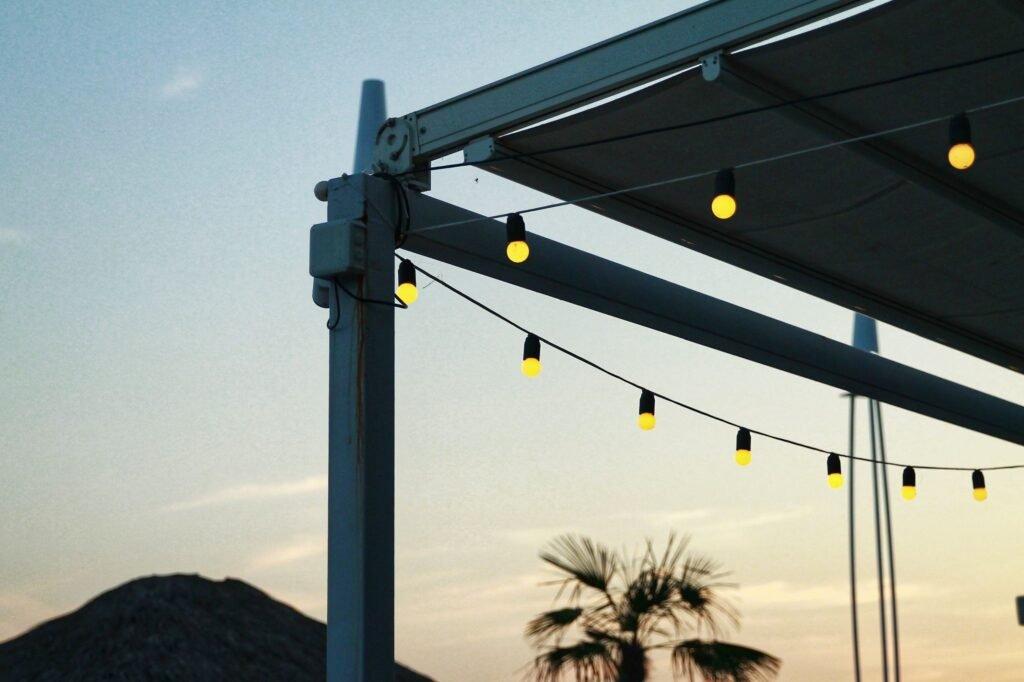
Many patios feel almost finished: the seating is in place, the plants look good, and yet the space still feels a little flat in the evening. Solar string lights are often the missing finishing touch. They add warmth, shape, and a sense of occasion without wiring, and they can be put up in an afternoon. This guide explains why they work, where to place them, and how to choose and care for them.
Why Solar Lights Work So Well Outdoors
Solar string lights use a small panel to collect daylight and a battery to store that energy for the evening. That simple design is what makes them so easy to use. You do not need an outdoor power outlet, an electrician, or a long extension cord trailing across the patio. You can hang them, move them, and try a different arrangement whenever you like.
They are also forgiving for beginners. If a first layout does not look quite right, you can take the lights down and try again without leaving holes for wiring or permanent fixtures. For renters and for anyone who likes to rearrange a patio for different seasons, that flexibility is a major advantage.
It is worth having realistic expectations. Solar lights depend on daylight, so their brightness and run time will vary with the season, the weather, and how much shade falls on the panel. They are best for creating atmosphere and gentle evening light, rather than for lighting a whole garden brightly for detailed work.
Placement Ideas for Patios and Balconies
Start by identifying the shape you want to highlight. On a patio with a pergola or a covered area, draping lights along the beams creates a ceiling of light that makes the space feel like an outdoor room. On an open patio, a zigzag pattern between two or three anchor points can give the same effect without a roof.
For a balcony, keep the scale small. A single strand along the railing, or a gentle swag from one corner to another, is usually enough. Avoid overloading a small railing with several heavy strands. One well-placed line of light will look calmer and more intentional than a tangle of wires.
Think about where people sit and look. Lights hung just above eye level, or slightly higher, tend to feel comfortable. Very low lights can glare, while lights placed too high can lose their cozy effect. Step back and look at the patio from inside the house as well, since that is often how the lights will be enjoyed on a quiet evening.
Choosing Warm Versus Cool Light
Colour temperature changes the whole mood of a patio. Warm white light has a soft, golden tone and usually feels relaxing, welcoming, and close to candlelight. It suits dining areas, seating corners, and evening gatherings. Cool white light is brighter and more bluish, and it can feel crisp and modern, but it can also feel stark in a small outdoor space.
For most patios, warm white is the safer choice if you want a finished, comfortable feeling. If your patio already has a modern style with grey stone, metal furniture, and cool-toned planting, a cool white strand may fit better. Whichever you choose, try to keep the colour consistent across strands. Mixing warm and cool lights in one small area can make the space look unfinished.
If you like a little colour, use it sparingly. A single coloured strand for a celebration can be fun, but for everyday use, a consistent warm glow will age better and suit more occasions.
Installation and Care
Before you hang anything, check the length you need. Measure the distance you want to cover, then allow extra length for swags and drops between anchor points. A strand that is pulled tight in a straight line can look severe, while a gentle sag looks softer and more natural. Use hooks, clips, or cable ties designed for outdoor use, and avoid nailing through the wire itself.
Place the solar panel where it will receive direct daylight for as much of the day as possible. A panel tucked under a roof, behind a plant, or facing a shaded wall will collect less energy. Many panels can be mounted separately from the lights, so you can put the panel in sun while the lights hang in a shadier seating area. Keep the panel clean, since dust and leaves can reduce how much light it collects.
At the end of the season, or before a long period of bad weather, take the lights down if they are easy to remove, wipe the panel, and store the strand loosely coiled rather than tightly knotted. Check the battery compartment for any signs of wear, and follow the instructions that came with your lights for battery care and replacement.
Safety and Weather Notes
Outdoor lights are made to handle rain, but they are not all alike. Check that the set you choose is rated for outdoor use, and read the care notes before leaving it out through a storm. Avoid running wires across walkways where someone could trip, and keep lights away from open flames, grills, and heaters.
In strong wind, a loose strand can swing and snag. Secure the ends and any middle anchor points, and take lightweight decorations down if a severe storm is forecast. If a strand stops working, inspect it for a damaged wire or a dirty panel before assuming the whole set has failed. Often a simple repositioning or cleaning will help.
Practical Tips for a Finished Look
Use lights to frame a feature you already like: a seating area, a planter, a trellis, or a doorway. Hide the solar panel and any excess wire where you can, so the eye rests on the lights rather than the equipment. Finally, test the lights at dusk, not in full daylight. That is when you will see the real effect, and it is the best time to adjust spacing and height.
Conclusion
Solar string lights are an easy, flexible way to make a patio feel finished. Choose a warm, consistent glow, place the panel in good daylight, hang the strand with a gentle drape, and keep the layout simple. With a little planning, one or two strands can turn an ordinary patio or balcony into a place you actually want to spend the evening.